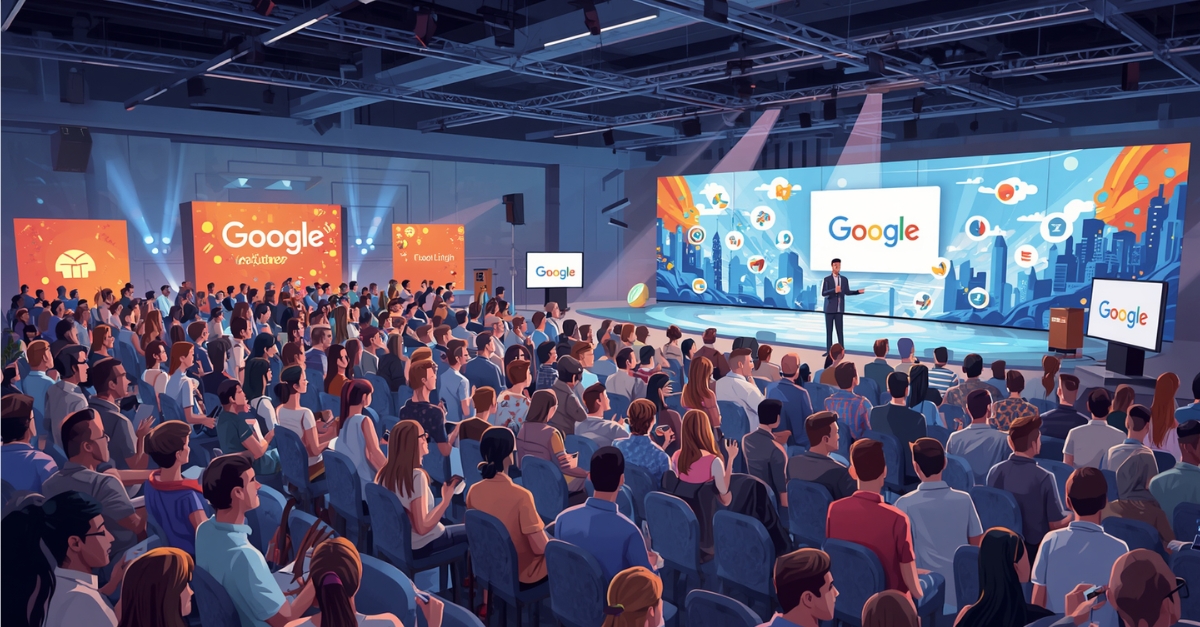
Each year, Google hosts Google Marketing Live, a keynote event where they announce the biggest updates to Google Ads, Search, YouTube, and online shopping. The event on May 20, 2026, stood out as one of the most important in recent years.
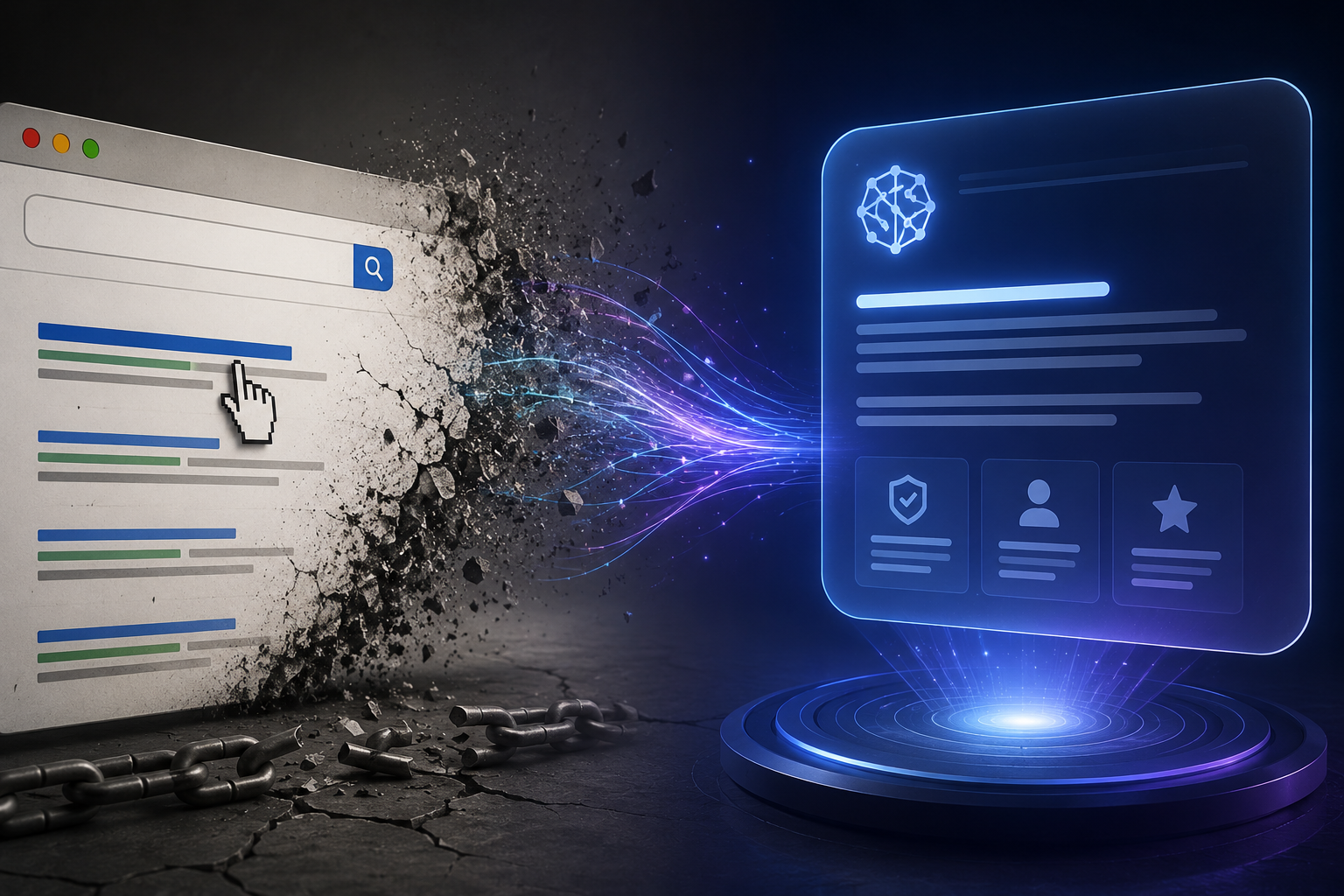
In short, Google is now letting its AI, Gemini, handle much of the advertising process. Tasks like choosing keywords, writing ad copy, selecting landing pages, creating ads, and even measuring results are now handled by AI rather than marketers. For small and medium-sized businesses using Google Ads, this means you’ll need to adjust how you set up, manage, and measure your campaigns.
We attended Google Marketing Live 2026 and have summarised each major announcement to explain what it means for your business. We’re also sharing how we’re helping our clients stay ahead of these changes instead of rushing to keep up.
What Google Announced at Marketing Live 2026
Google's Chief Business Officer opened the keynote with a statement that set the tone: "I'm not exaggerating when I say we have made a decade's worth of innovation in the last year alone."
This was not just an exaggeration. It was a clear message to advertisers that Google Ads is changing faster than ever, and waiting to adapt is now risky.
Here’s a summary of the announcements and what they mean for your business.
1. Google Search Is Becoming a Conversation — And Ads Are Changing With It
What Google Announced
Google’s AI Mode, which offers a conversational search experience, now has over one billion monthly users. Searches in AI Mode last three times longer than regular searches, and question-based searches such as "what's the best," "ideas for," and "which should I choose" are growing 30% faster than other types.
To match this shift, Google introduced a new generation of ad formats built specifically for AI Mode:
- Conversational Discovery Ads — Gemini writes ad copy dynamically, tailored to the exact question a user asked.
- Highlighted Answers — Your ad can appear as a recommended answer within an AI-generated list response.
- AI-Powered Shopping Ads — Gemini writes a custom product description for each shopper based on their specific search.
- Business Agent for Leads — A chat agent inside your ad answers a prospect's questions in real time, using your own website and rolling out first in automotive, education, and real estate.
What This Means for Your Business
People are searching differently now. Longer, more conversational searches are common, especially on mobile devices. If your ads are not set up for AI Mode, you could miss out on a fast-growing audience of over one billion people.
But here is the critical nuance: AI cannot configure itself. These new formats require precise campaign architecture, high-quality audience signals, and creative inputs that only an experienced team can deliver. Google’s automation is only as intelligent as the framework it is given to work within.
The Pico team ensures our clients’ campaigns are built on that framework from day one, so the AI is working for your business, not guessing on your behalf.
2. A Hard Deadline Is Coming for Google Ads in September 2026
What Google Announced
Dynamic Search Ads (DSA), one of the most popular Google Ads campaign types, will be retired in September 2026. All DSA campaigns will automatically move to Google’s new AI-powered format, AI Max for Search, no matter your readiness. This change comes just weeks before the busy holiday shopping season, which is the most important time of year for many businesses.
| Feature |
Dynamic Search Ads (DSA) |
AI Max for Search |
| Keyword matching |
Crawls your site and matches to queries |
Gemini interprets conversational intent and semantic meaning, expanding beyond rigid keywords |
| Landing page control |
You own the destination URL mapping |
AI selects the most relevant page |
| Ad copy |
You write headlines; DSA fills gaps |
Gemini generates copy dynamically |
| Targeting |
Site category or page-level rules |
Goal-based, AI-driven |
| AI Mode eligibility |
Not eligible |
Required for all new AI Mode formats |
| Creative brief input |
Not available |
AI Brief available |
What This Means for Your Business
If you are running DSA campaigns now, September is approaching quickly. Businesses that switch early and set things up properly will have valuable learning data before their competitors as the fourth quarter begins. Those who wait and are automatically migrated may face problems during their busiest season.
This is exactly the kind of deadline where having a senior, accountable team matters most, because an automated migration with no strategic oversight is a recipe for wasted budget at the worst possible time. We already handle this migration for our clients, building bespoke negative keyword architecture and AI Briefs ahead of the deadline. If you are unsure about your status, now is the time to reach out.
3. Google Shopping Just Got a Major Upgrade — Including a Cross-Site Cart
What Google Announced
Google introduced Universal Cart, a shopping cart that works across Google Search, the Gemini app, YouTube, and Gmail. Shoppers can add products while searching on Google or watching YouTube, then check out from one unified cart, either through Google or directly on the retailer’s website.
The cart automatically tracks price drops and back-in-stock alerts. Google is also integrating Buy Now, Pay Later via Klarna and Affirm, and expanding direct purchasing to hotel bookings and local food delivery.
This is powered by the Universal Commerce Protocol (UCP) — an open standard co-developed with Shopify, Etsy, Wayfair, Target, Walmart, Amazon, Meta, Microsoft, Salesforce, and Stripe.
What This Means for Your Business
If you sell products online, having high-quality and complete product data in your Google Merchant Center feed is more important than ever. This data decides if your products show up in AI-powered shopping ads, Universal Cart, and Google’s new shopping features.
Crucially, even when checkout happens via the Universal Cart, your business remains the merchant of record—meaning you keep your customer data and relationships.
Our job is simply making sure your products are flawless so Google surfaces them first. The AI will surface what it is given, and if your feed is incomplete, inaccurate, or poorly structured, it will surface your competitors instead. Businesses with clean, accurate, and well-organized product feeds will have a decisive advantage. We include feed management and Merchant Center health in our support for every Google e-commerce client.
4. YouTube Is Now a Performance Channel, Not Just a Brand Channel
What Google Announced
Google emphasized that YouTube is now a direct performance channel, not just a platform for building brand awareness. Advertisers who add Demand Gen campaigns to their Search and Shopping efforts see a 10% higher return on ad spend and, on average, a 12% increase in sales.
- Demand Gen on Google Maps — For the first time, video and visual ads serve on Google Maps, opening a new surface for local businesses.
- Creator content in campaigns — Surface creator videos featuring your brand directly inside campaign setup. Adding creator content increases conversion lift by an average of 20%.
- Campaign-type attribution — A new measurement model clearly shows what YouTube contributed to conversions, separate from Search and Shopping.
A key takeaway from GML 2026: Only 40% of conversions from YouTube campaigns happen in the first 30 days. If you evaluate a YouTube campaign after just two weeks, you are only seeing part of the results.
What This Means for Your Business
In the past, YouTube ads were mostly for big brands with large budgets. Now, better performance measurement and new creator content tools make YouTube a real option for small and medium businesses.
But the data here is telling: only 40% of YouTube conversions happen in the first 30 days. Without a specialist who understands how to set the right measurement windows and attribution models, most businesses will review their YouTube campaigns after 2 weeks and pull the budget prematurely, just before the results arrive. If your competitors are using YouTube and you are not, this is the year to consider it. Pico can assess whether YouTube fits your strategy and, critically, set up so you can actually trust the numbers.
5. AI Is Now Writing Your Ads — Here's How to Stay in Control
What Google Announced
Google rebuilt its creative production tooling as Asset Studio — a hub inside Google Ads where Gemini, Veo (video generation), and Imagen (image generation) work together to produce ad creative at scale. This summer, Google is adding Gemini Omni — its most advanced generative model — to Asset Studio.
Google also announced AI Brief — a structured input mechanism where you give Gemini your brand voice, approved messaging, key messages, and explicit exclusions before it generates copy. Think of it as the briefing document you'd give a copywriter, except it governs everything Gemini produces across your campaigns.
What This Means for Your Business
If you do not provide an AI Brief, Gemini will make its own decisions. This is not a hypothetical risk; it means an algorithm trained on board patterns is writing your brand’s messaging with no knowledge of your tone, your differentiators, or what you would never say to a customer.
For businesses in regulated industries, with hard-won brand equity, or where a single off-message ad can damage trust, this matters the most. AI is a powerful tool, but it has no accountability for your brand. That accountability belongs to a team of specialized, skilled people. Pico sets up AI briefs for every AI Max campaign we manage because the quality of your input determines the quality of the output, and we are not prepared to leave that to chance.
6. Measuring What's Working Just Got More Sophisticated
What Google Announced
Meridian — Google's marketing mix modeling tool — is now integrated directly into Google Analytics 360 (a paid feature of GA4), enabling continuous channel-level ROI analysis rather than a once-a-year exercise. Google also announced Qualified Future Conversions — a predictive signal that identifies high-value conversions before they fully complete, particularly valuable for businesses with longer sales cycles.
What This Means for Your Business
The more first-party data you connect to Google, such as CRM data, offline sales, and customer match lists, the better these measurement tools will perform.
But this is also where the gap between managed and unmanaged accounts widens most sharply. Connecting data sources correctly requires technical precision; a misconfigured conversion or a missing offline import means AI is optimizing toward the wrong goal entirely, and you may not realize it for weeks.
Businesses that invest in clean data connections, maintained by specialists who understand what the numbers actually mean, will get more accurate results and improved AI performance.
Those who do not will have less visibility and less control as Google’s AI takes over more decisions. The Pico team reviews these connections as a standard part of every client's engagement, because accountability for your data cannot be outsourced to the platform.
What Is Pico Digital Marketing Doing About All of This?
The announcements above make one thing clear: AI is now doing more of the execution. But that does not reduce the need for expertise; it raises it.
Someone still has to define the strategy, set the guardrails, interpret the data, and be accountable when things go wrong. AI does not call you when your September migration caused a 30% drop in leads. A senior specialist does. We do not just watch Google’s announcements; we take action. Here is how we are responding to GML 2026 on behalf of our clients, before the industry catches up:
- DSA to AI Max Migration — We are proactively auditing every client account running Dynamic Search Ads and building migration plans ahead of the September deadline, including negative keyword architecture, AI Brief setup, and campaign compartmentalization.
- Feed and Merchant Center Audits — We are conducting full Merchant Center audits for eCommerce clients, resolving errors, and ensuring feeds are structured for AI-powered discovery and Universal Cart eligibility.
- First-Party Data Connections — We are ensuring every client has enhanced conversions active, offline conversion imports flowing, and CRM data connected through Google's Data Manager API.
- YouTube as a Performance Channel — For eligible clients, we are building the business case for Demand Gen campaigns and identifying opportunities for creator content.
- Measurement Foundations — We are reviewing GA4 configurations for Meridian compatibility and ensuring conversion windows are set correctly for all campaign types.
What Should You Do Right Now?
If you are a current Pico client, you do not need to take any action at this time. We are already reviewing your account based on GML 2026 and will contact you with recommendations tailored to your campaigns. If you have questions before then, please contact your account manager directly.
If you are not working with Pico yet, the September DSA deadline and AI Mode requirements are creating a clear gap between businesses ready for Google’s AI-first approach and those that are not. We offer a free Google Ads account audit that checks AI Max readiness, feed health, measurement setup, and YouTube opportunities. Contact us today to get started.
Frequently Asked Questions
Do I need to act on the DSA retirement if I have an agency managing my ads?
Yes. Ask your agency directly about their migration plan and when they plan to complete it. September is a firm deadline, and the quality of migration can vary a lot depending on the approach. We always handle migrations proactively and set up everything properly for all clients using DSA.
Will AI-generated ads represent my brand the way I'd want?
With a proper AI Brief, yes. If you do not provide a clear brand brief, Gemini will fill in the gaps as best it can. When you give a specific, well-written brief, the results are usually strong. Pico treats AI Brief setup as a key part of every campaign, not an afterthought.
Does the Universal Cart apply if I sell services rather than products?
The Universal Cart is mainly for retail and eCommerce. However, the broader changes from GML, such as conversational search, Business Agent for Leads, and AI Mode ad formats, also affect service businesses. The Business Agent for Leads is designed for high-consideration service areas such as real estate, education, and automotive.
What if I have a small budget — do these changes still affect me?
Yes. AI Max, AI Mode formats, and the new way Google matches queries to ads apply no matter your budget size. In some cases, smaller budgets benefit even more from AI Max’s ability to find efficient matches that manual keyword management might miss, but this only works if your account is set up correctly.
How do I know if my Google Ads are set up for AI Mode placements?
Your campaigns need to be running AI Max for Search or Performance Max to be eligible for AI Mode ad formats. If you're running standard Search campaigns or DSA only, you are currently not appearing in AI Mode. Contact Pico for a complimentary account audit to assess your eligibility.


.jpg)




.jpg)




.jpg)
.jpg)

.png)