For years, marketers have focused on campaign management: adjusting bids, refining targeting, testing creative, and optimizing landing pages.
While those fundamentals still matter, the way digital advertising works is changing rapidly.
Google, Meta, LinkedIn, Reddit, and nearly all other platforms are increasingly relying on artificial intelligence to make decisions that marketers once controlled manually. From bidding and audience targeting to creative optimization and search experiences, AI is becoming the engine behind modern digital marketing.
The question is no longer:
“Should we use AI?”
The question is:
“Is our marketing ecosystem ready for AI?”
How Is AI Already Changing Digital Advertising?
Google has recently made one thing clear: AI will play an increasingly important role in how users discover information, interact with brands, and make purchasing decisions.
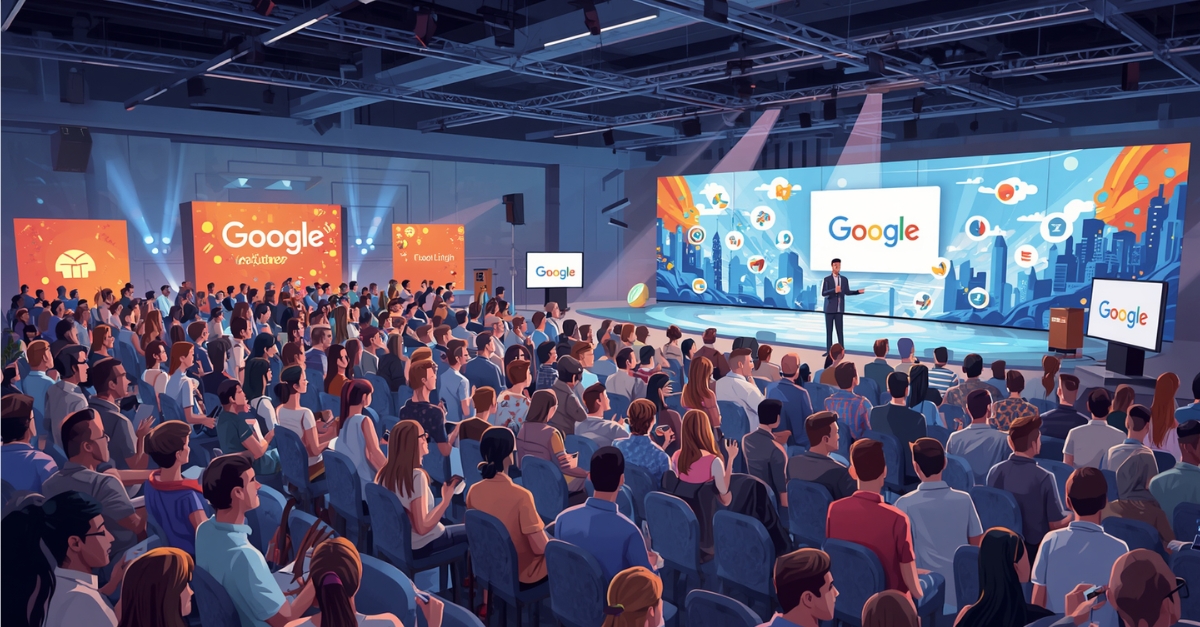
Recent announcements from Google Marketing Live further reinforced the industry's direction toward AI-assisted search, creative generation, and automated campaign optimization.
At the same time, Meta continues to expand Advantage+ automation, LinkedIn is introducing AI-powered campaign enhancements, and Reddit is investing heavily in machine-learning-driven audience optimization.
Whether businesses realize it or not, AI is already influencing campaign performance across nearly every major advertising platform.
The organizations that will benefit most are not necessarily those with the largest budgets. They are the organizations providing the strongest signals.
Why Does Data Quality Determine AI Advertising Performance?
One of the biggest misconceptions about AI-powered advertising is that simply turning on automation will improve performance.
In reality, AI is only as effective as the information it receives.
If conversion tracking is incomplete, audiences are fragmented, CRM systems are disconnected, or creative assets are limited, advertising platforms are forced to make decisions using incomplete data.
That often leads to:
- Inefficient budget allocation
- Lower-quality leads
- Missed conversion opportunities
- Reduced visibility into campaign performance
On the other hand, businesses with strong tracking, audience data, diverse creative, and measurement systems provide AI with the information it needs to make smarter decisions.
How Does Conversion Tracking Give Businesses a Competitive Advantage When Using AI?
Most businesses think of measurement as a reporting tool.
The reality is that measurement has become an optimization tool.
Enhanced Conversions, first-party audiences, CRM integrations, offline conversion tracking, and conversion value optimization are no longer “nice-to-have” features.
They are the foundation that powers modern AI-driven advertising.
The businesses investing in these areas today are building a competitive advantage that becomes more valuable over time.
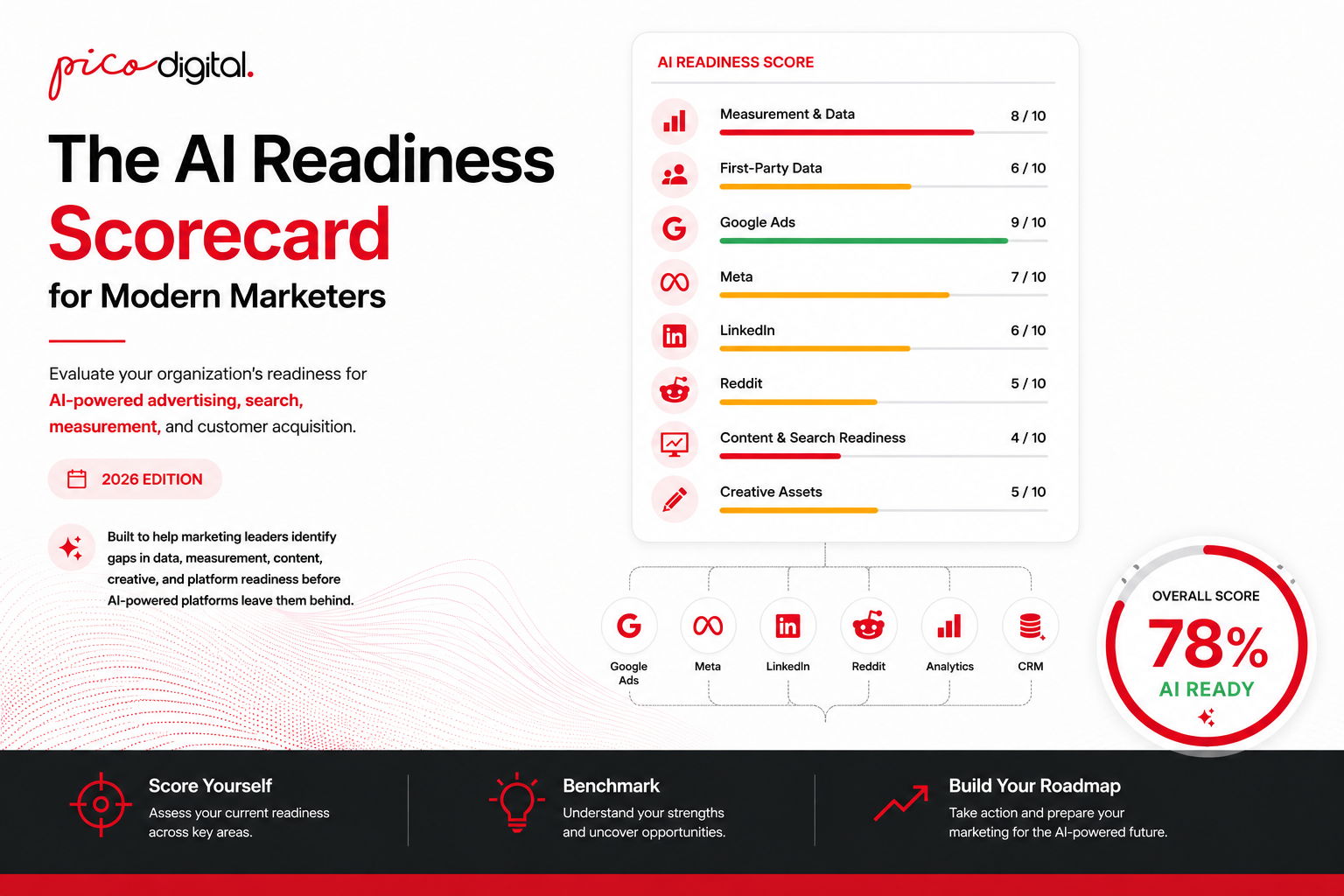
What Is The Pico Digital AI Readiness Scorecard?
Over the past several months, our Pico Digital team has been evaluating how prepared clients are for the next generation of AI-powered marketing.
To create a consistent framework, we developed an AI Readiness Scorecard. The scorecard evaluates six critical areas:
- Measurement & Tracking
Can advertising platforms accurately understand what success looks like?
- Audience & Data Readiness
Are you providing AI with strong audience signals and first-party data?
- Creative Readiness
Do you have enough asset diversity for modern AI-powered campaign types?
- Automation Adoption
Are you leveraging platform automation strategically?
- Website & Conversion Experience
Can users easily convert, and are those conversions properly measured?
- AI Visibility & Search Readiness
Is your brand positioned to remain visible as search experiences evolve?
What Are the Most Common AI Readiness Gaps in Digital Marketing?
Across industries, we consistently uncover opportunities such as:
- Missing Enhanced Conversions
- Incomplete CRM integrations
- No offline conversion tracking
- Limited audience segmentation
- Weak first-party data strategies
- Creative fatigue
- Landing pages that aren’t optimized for conversion
- Limited preparation for AI-powered search experiences
- A lack of structured testing across creative, messaging, landing pages, and conversion paths
These gaps often limit performance long before budget becomes the problem.
AI Isn't New. The Way We Work With It Is.
While AI has become the dominant topic in marketing conversations over the last few years, automation and machine learning have been influencing digital advertising for much longer.
Google's Smart Bidding, Meta's optimization systems, audience expansion, predictive targeting, and automated campaign types have all relied on AI and machine learning for years.
What's changing now is the speed, visibility, and scope of those technologies.
Today's marketers are no longer deciding whether to use AI. The platforms have already made that decision. The challenge is understanding how to guide those systems with the right data, measurement frameworks, creative assets, and business objectives.
Organizations that view AI as a replacement for strategy often struggle. Organizations that combine AI with strong marketing fundamentals are best positioned to benefit.
Does AI Replace the Need for Marketing Expertise?
One of the most common misconceptions we hear is that AI will eliminate the need for marketers and agencies.
In reality, we're seeing the opposite.
AI can process enormous amounts of data, automate optimization decisions, and identify patterns faster than any human team. What it cannot do is determine business priorities, validate measurement strategies, align marketing with revenue goals, or ensure the data being fed into those systems is accurate.
The companies seeing the strongest results today aren't simply turning on AI features. They're investing in the foundational work that allows AI to perform at its best.
That includes:
- Building reliable conversion tracking
- Connecting CRM and first-party data sources
- Developing stronger audience strategies
- Creating diverse creative assets for AI-powered campaigns
- A/B testing creative assets, copy, and landing pages, using The PICO Framework method
- Improving landing page experiences
- Establishing clear measurement frameworks
AI can accelerate performance, but only when the foundation is in place.
How Pico Digital Helps Organizations Become AI-Ready?
Having worked through every major evolution in digital marketing—from search and social advertising to automation and now AI-powered platforms—we bring a level of cross-industry experience and accumulated testing knowledge that most organizations simply can't replicate internally. That experience helps us separate trends from lasting opportunities and apply proven insights across a wide range of business challenges.
We believe the future of marketing isn't AI versus people. It's AI-powered by strong strategy, quality data, thoughtful testing, and experienced decision-making. Our role is to help organizations build the foundation that allows modern advertising platforms to perform at their best.
Through our AI Readiness Audit, we evaluate:
- Measurement and tracking systems
- Audience and first-party data readiness
- Creative asset diversity
- Automation adoption opportunities
- Website and conversion experience
- Search and AI visibility preparedness
From there, we provide a prioritized roadmap focused on the areas that will have the greatest impact on performance.
The goal isn't simply to adopt more AI.
The goal is to ensure AI has the right signals, data, and strategic direction to help your business grow.
For one of our current clients, implementing Enhanced Conversions and improving conversion tracking increased the amount of data available to Google's bidding algorithms, helping improve optimization and reporting accuracy
How Do I Know If My Marketing Is Ready for AI?
To determine whether your marketing is ready for AI, evaluate six areas: conversion tracking, audience data, creative diversity, automation adoption, website experience, and AI search visibility. The Pico Digital AI Readiness Scorecard gives you a structured way to do exactly that.
The organizations that succeed in the AI era won't necessarily be the ones with the biggest budgets or the most AI tools. They'll be the ones with the strongest foundations.
Accurate measurement. Connected data. Effective creative. Clear business objectives. Strong testing frameworks.
Those fundamentals have always mattered. AI simply makes them more important than ever.
Download the Pico Digital AI Readiness Scorecard to evaluate your current capabilities and identify opportunities to improve performance across measurement, data, creative, automation, and AI-powered search.



.webp)




.jpg)






.jpg)
.jpg)

.png)